The Method Is the Artifact
How I govern a research program that might be wrong, and why the governance system is the part that transfers to client work.
All posts across every category.
How I govern a research program that might be wrong, and why the governance system is the part that transfers to client work.
During the July 29 Anthropic outage, passive analysis of public BGP routing data showed the first anomaly at 15:00 UTC, a failed remediation signature, and a repeating pattern across 15 days of incidents.
A look at the actual costs and operational overhead of running a multi-tenant SaaS on Cloudflare Workers and D1, based on production use with real tenants and real traffic.
A step-by-step guide to filing a VA disability claim in 2026. VA Form 21-526EZ, Intent to File, required evidence, the C&P exam, and what happens after you submit.
Military retirement pay is calculated using one of three formulas depending on your retirement system. Here is how High-3, BRS, and REDUX work, with step-by-step examples at common pay grades.
Military retirees can receive both retirement pay and VA disability compensation through CRDP or CRSC. Here is how each program works, who qualifies, and how to choose between them.
The REDUX retirement option trades a $30,000 lump sum at 15 years for a permanently reduced pension and a COLA penalty that compounds for decades. Here is the math behind why it rarely works out.
BRS and High-3 produce different retirement outcomes depending on career length, TSP investment discipline, and tax bracket. Here is how each system works and which one comes out ahead.
The 2026 VA cost-of-living adjustment is 2.5 percent, effective December 1, 2025. Here is how the increase was calculated, what it means for your monthly payment, and what to do if your check did not update correctly.
2026 VA disability compensation rates effective December 1, 2025, with the full monthly payment chart by rating percentage and dependent status. Rates reflect the 2.5% COLA under 38 U.S.C. § 5312.
A VA nexus letter is a medical opinion connecting a current disability to military service. Here is when you need one, what it must say, who should write it, and how to use it to win your claim.
A VA supplemental claim under 38 CFR § 3.2501 is the correct path to challenge a prior denial or request a rating increase using new evidence. Here is how to file, what evidence qualifies, and what to expect.
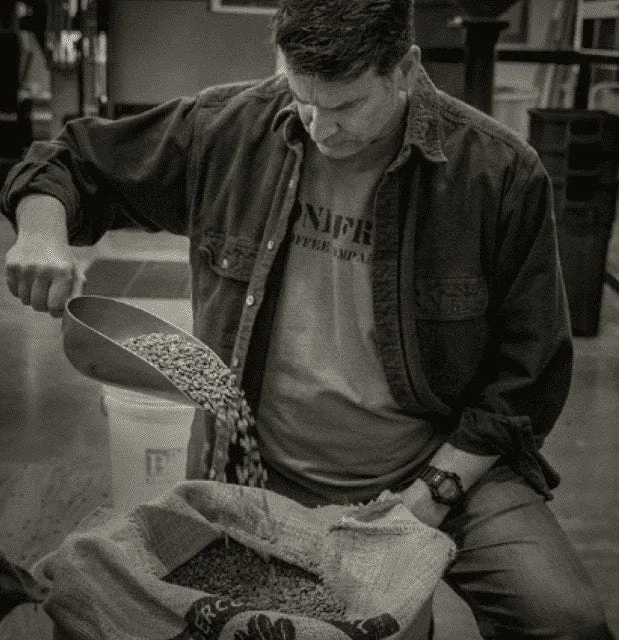
LCDR Tim Cruickshank (USN SEAL, RET.) built Bonefrog Coffee to honor fallen teammates and support their families. A road trip to his Redmond, Washington roastery.
Exact 2026 VA compensation rates for 100% disabled veterans by dependent status, plus what P&T means, how SMC stacks, and what 100% does not automatically include.
How to win a VA claim using the Caluza three-element standard, nexus letters, lay evidence, and TDIU. Evidence strategy for sleep apnea, tinnitus, back pain, knee, and PTSD.
TDIU under 38 CFR § 4.16 pays the same monthly rate as scheduler 100% when service-connected disabilities prevent substantially gainful employment. Here is how to qualify and claim it.
How the VA combined rating formula actually works in 2026: the whole person method, bilateral factor, rounding rules, and back pay under 38 U.S.C. § 5110.
VA rates lumbar spine conditions under DC 5237 based on forward flexion in degrees. Most C&P exams underrate back pain by skipping DeLuca factors. Here is what the regulations actually require.
VA rates sleep apnea under DC 6847. CPAP prescription determines 50% vs. 0%. Here is the evidence strategy for direct and secondary service connection, including PTSD-to-sleep-apnea claims.
VA secondary service connection under 38 CFR § 3.310 covers conditions caused by or aggravated by service-connected disabilities. Here is how to build the claim and write the nexus letter.
VA rates tinnitus at 10% maximum under DC 6260, regardless of severity. Here is how to establish service connection, claim hearing loss separately, and build secondary conditions.
XOps360 operates on one principle: hard problems deserve simple systems. This is what that means in practice.
In April I ran a multi-agent FedRAMP investigation on Cloudflare Workers primitives. One agent flagged an unresolved question about AWS Bedrock GovCloud authorization. Checking it changed the conclusion, and matters if you are planning a Workers AI remediation project.
45 captures. 5 routing policies. 3 traffic matrices. A 7-node containerlab topology running on a single server. The experiment was designed to test whether Hodge decomposition could separate two sources of network flow structure. It could. But not the two I expected.
A new security primitive for AI agent systems. Instead of hiding secrets behind locks, build systems where secrets only materialize inside protected execution boundaries.
Part 8 of the PPOS series. Proofs tell you the system should work. Monte Carlo simulation tells you it does work. Under load, under failure, and under adversarial conditions.
Part 7 of the PPOS series. Shannon entropy applied to personalization variety reveals a linear relationship between product diversity and overhead. Plus: a formal governance algebra that prevents unauthorized workflow modifications.
Part 6 of the PPOS series. When your production system crashes mid-transaction, what happens to your data? Event sourcing and exactly-once semantics give you a deterministic answer.
A detailed walkthrough of the VA Compensation and Pension exam process, what the examiner is actually doing, how the DBQ translates your experience into a rating, and how to avoid the mistakes that cost veterans money every day.
The mental health rating formula explained at the level most veterans never reach: the decision points, the traps, the legal protections, and the emotional weight of reducing your mental health to a federal percentage.
Most veterans don't know that VA compensation goes above 100%. Special Monthly Compensation, overlooked conditions, secondary claim chains, and PACT Act presumptives explained with verified 2026 rates.
The series finale. How to fight a wrong rating, who can help you, what buddy statements actually do, and why your VA claim is a campaign, not a single battle.
A step-by-step guide to reading the federal regulations that determine your VA disability rating, doing an honest self-assessment, and learning to describe your conditions in the language the VA actually uses.
How the VA combines disability ratings using the whole person theory, why your numbers don't add up the way you expect, and how to think strategically about secondary conditions, the bilateral factor, and TDIU.
The VA disability system rates every condition using published federal criteria. Most veterans never read them. This post introduces the three regulations that shift the entire process in your favor.
Part 5 of the PPOS series. When you frame production operations as a discrete event system under supervisory control, you get formal safety guarantees that no amount of process documentation can provide.
Part 4 of the PPOS series. Optimal production batching reduces to bin packing, which is NP-hard. Here's what that means practically and how greedy heuristics get you close enough.
Part 6 of the PDKS series. Authority convergence isn't an academic exercise. It directly bounds revenue volatility. Here's why the contraction gap is a financial metric.
Part 3 of the PPOS series. Nine invariants that must hold at all times, proven to survive concurrent operations. This is what separates a workflow from a specification.
Part 5 of the PDKS series. In any niche, multiple domains compete for authority. Replicator dynamics from evolutionary game theory reveal when equilibria exist, and when winner-take-all is inevitable.
Three deliberate moves that separate a brown butter chocolate chip cookie from every other recipe: Maillard-reacted milk solids, rapid thermal arrest, and overnight gluten relaxation.
A pineapple salsa born from a Hawaiian studio apartment with a hotplate, a mini fridge, and zero counter space. Why constraint is the best teacher in the kitchen.
Acid cooking in a studio apartment. The drain-and-refresh method, why your second squeeze of lime matters more than your first, and raw fish knowledge from the fishing docks of Oahu.
Sous vide apples, blind-baked crust, reduced juice glaze. Every step in this pie solves a specific structural problem that traditional recipes ignore.
Part 2 of the Redirect Lifeguard series. An enterprise SEO firm couldn't scope the timeline. Premium tools gate this behind expensive tiers. We solved it in an afternoon with TypeScript and clear thinking.
Part 2 of the PPOS series. Every production workflow is secretly a finite state machine. Making it explicit eliminates the class of errors caused by 'I thought the rule was different.'
You can export your ChatGPT conversations. You just can't read them. Here's why OpenAI's data export is technically compliant but practically useless, and what I did about it.
Part 4 of the PDKS series. When competitors, bots, or algorithm changes try to destabilize your authority, how much damage can they actually do? The math gives a bound.
Part 1 of the PPOS series. You wouldn't deploy software without a spec. Why do we run production operations: where real money and real products are at stake. On informal process documents?
Part 3 of the PDKS series. Every personalization system faces a tension: adapt to the user or preserve the truth. The projection operator formalism resolves it.
The industry sells complexity. Every project in this portfolio proves that rigorous thinking applied to commodity systems outperforms complex infrastructure applied to shallow understanding. Here's the thesis.
A curated, tested list of free press release distribution sites with domain authority ratings, effort levels, and practical notes on what actually drives results.
Part 2 of the PDKS series. Authority convergence isn't a hope. It's a provable property. Here's the contraction mapping that guarantees it, and what breaks the guarantee.
Wikipedia backlinks are the highest-authority links on the internet. Here's why most SEO advice about getting them is wrong, and what actually works.
Part 1 of the PDKS series. In AI-mediated information economies, authority doesn't just happen. It converges, or fails to. Based on structural properties you can formally specify.
Part 4 of the Adaptive Enterprise series. Scale used to be the moat. In a world of adaptive systems, the moat is how fast you can structurally evolve.
AI can write code. Someone has to govern it. A framework for making AI-driven software changes safe, auditable, and usable at scale.
Part 4 of the SPC series. Product Information Management systems are treated as data stores. They should be treated as the authority layer for what your business actually knows.
Part 3 of the Nemean Lion World Fabric series. When your system models the world perpetually, raw data storage grows without bound. Structural abstraction keeps it sublinear.
Part 1 of the Redirect Lifeguard series. How we designed an SEO redirect analysis tool with minimal infrastructure, cheap overhead, and a path to marketplace viability.
Part 3 of the Adaptive Enterprise series. Digital twin technology has transformed aerospace and manufacturing. Here's what happens when you apply it to business operations.
Part 3 of the SPC series. When a botched platform migration destroys decades of accumulated search authority, conventional SEO tactics aren't enough. Here's the structural recovery plan.
Part 2 of the SPERA series. Every change to a system impacts other systems. Most organizations track this through memory and meetings. Here's how to track it through architecture.
Part 2 of the Nemean Lion World Fabric series. When you aggregate models from untrusted nodes, you need math, not faith. To guarantee convergence.
Part 2 of the Adaptive Enterprise series. The science of organizational adaptability was formalized fifty years ago. Most software still ignores it.
Part 2 of the SPC series. Classical web systems are Markovian. They react only to current state. What happens when you build systems that remember how users arrived?
Part 1 of the SPERA series. Documentation fails because it conflates observation with interpretation, and interpretation with authority. Separating these layers changes everything.
Part 1 of the Nemean Lion World Fabric series. Most digital twins predict what will happen. Causal digital twins explain why, and that difference changes everything.
Part 1 of the Adaptive Enterprise series. Every organization runs on software that was configured once and rarely questioned. That rigidity has a compounding cost most leaders never see.
Part 1 of the SPC series. Most ecommerce SEO treats pages as documents to optimize. What if you treated them as projections of structured knowledge instead?
What happens when two veterans take over a business that looked successful on paper but was propped up by a pandemic. Lessons in operational honesty.
What a weekend of pheasant hunting in Worthington, Minnesota taught me about community, service, and the transition that never really ends.
How pheasant hunting in southern Minnesota is helping veterans rediscover camaraderie, connection, and purpose after service.
A complete walkthrough of how I built xops360.com using Astro's content collections, deployed on Cloudflare Pages with a custom domain, for free.
Your DD-214 won't get you hired. Here's how to translate military skills, leadership, and experience into language that civilian hiring managers actually understand.
The traditional castle-and-moat approach to network security is dead. Here's why zero trust isn't optional anymore and how to start implementing it.
The best burger you'll ever make at home requires exactly one pan, 10 minutes, and zero complicated techniques. High protein, simple ingredients, pure satisfaction.
Stop collecting certifications like Pokémon cards. Here's how to build a certification roadmap that actually accelerates your career instead of just draining your wallet.
The hardest part of balancing a demanding career and family isn't time management. It's attention management. Here's what actually works.